
Your Garage Door Springs Are Doing More Work Than You Think
Every time you open or close your garage door, the springs are doing the heavy lifting — literally. A standard residential garage door can weigh anywhere from 130 to 350 pounds, and it's the springs that counterbalance all that weight so your opener (and your arms, if you're operating it manually) don't have to bear the full load.
But like any mechanical component under constant stress, garage door springs wear out over time. For homeowners in Zanesville and throughout Muskingum County, understanding the lifespan of your springs — and recognizing when they're nearing the end — can save you from unexpected breakdowns, costly damage, and even dangerous situations.
How Long Do Garage Door Springs Typically Last?
The lifespan of a garage door spring is measured in cycles. One cycle equals one full open-and-close of the door. Most standard torsion springs are rated for approximately 10,000 cycles, which translates to roughly 7 to 10 years of typical residential use.
However, several factors can shorten or extend that lifespan:
- Frequency of use: A family that opens and closes the garage door four to six times a day will wear through springs faster than someone who uses it twice daily.
- Climate and temperature swings: Here in Zanesville, we experience significant temperature changes between seasons. Cold winters cause metal to contract and become more brittle, which can accelerate spring fatigue.
- Maintenance habits: Springs that are regularly lubricated and inspected tend to last longer than those that are neglected.
- Spring quality: Not all springs are created equal. Higher-cycle springs (rated for 20,000 or even 25,000 cycles) are available and can last significantly longer, though they cost more upfront.
Torsion Springs vs. Extension Springs: What's the Difference?
There are two main types of garage door springs, and each has different characteristics when it comes to replacement:
Torsion Springs
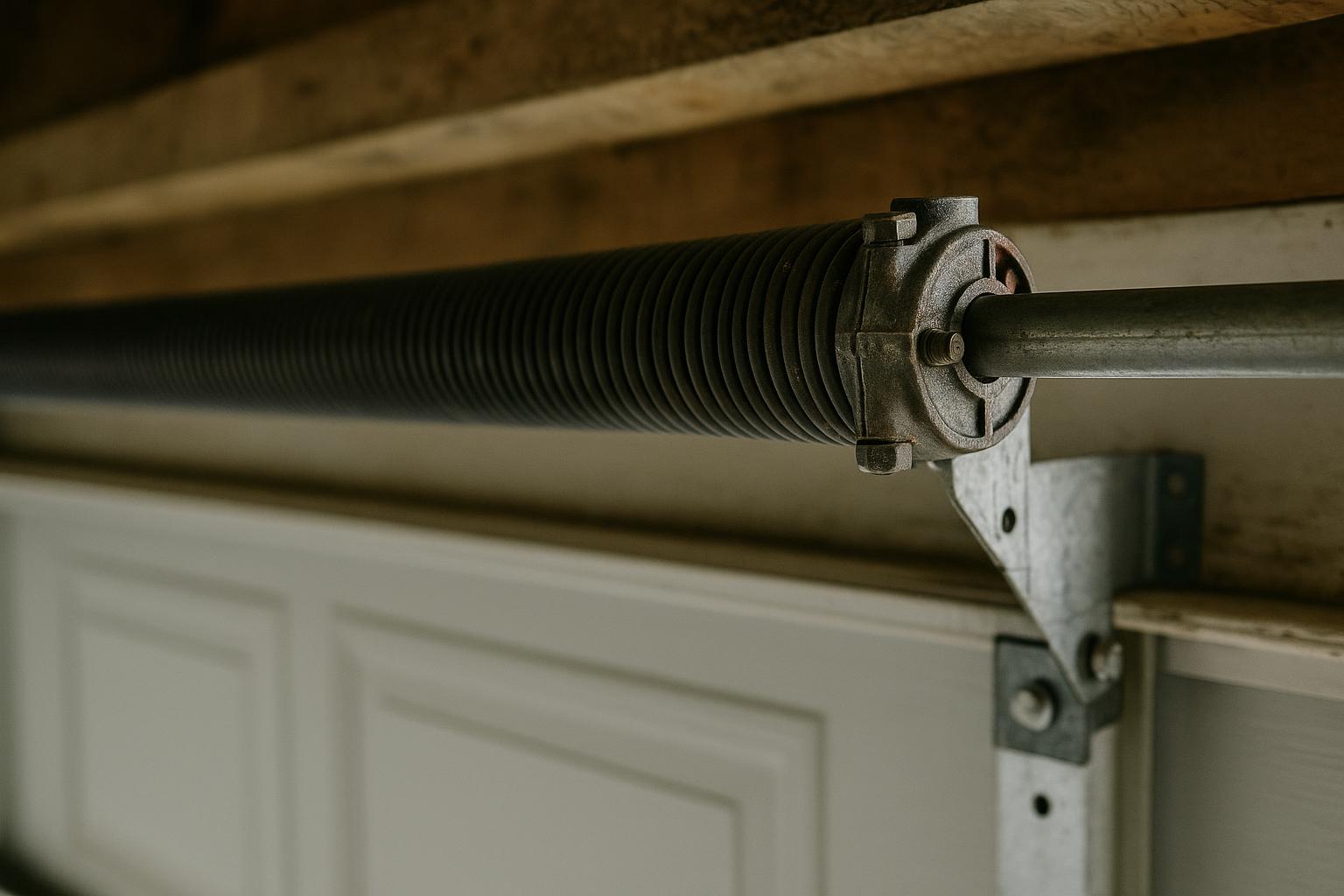
Torsion springs are mounted on a metal shaft above the garage door opening. They use torque to lift the door and are the more common type found in modern garage door systems. They tend to be more durable, provide smoother operation, and are generally safer than extension springs.
Extension Springs
Extension springs run along the horizontal tracks on either side of the door. They stretch and contract to provide lifting force. These are more commonly found on older garage doors and lighter single-car doors. Extension springs typically have a shorter lifespan and can be more dangerous when they break if they don't have safety cables installed.
If your home in Zanesville still has extension springs, it may be worth considering an upgrade to torsion springs during your next replacement. The improved performance and safety are well worth the investment.
Warning Signs Your Garage Door Springs Need Replacement
Springs rarely fail without warning. Here are the most common signs that your springs are wearing out and need attention:
- The door feels unusually heavy: If your garage door feels significantly heavier when you try to lift it manually, the springs may be losing tension.
- Visible gaps in the spring coils: A healthy torsion spring has tightly wound coils. If you notice gaps or separation between the coils, the spring is stretched and nearing failure.
- The door opens unevenly: If one side of the door lifts higher than the other, one of your springs may be weaker or broken.
- Loud bang from the garage: A broken spring often produces a loud, startling noise — like a firecracker going off in the garage. If you hear this sound, do not attempt to operate the door.
- The opener struggles or stops working: Your garage door opener is designed to work with properly functioning springs. When springs weaken, the opener has to work much harder, which can burn out the motor prematurely.
- The door won't stay open: If your garage door slides down when you try to leave it partially open, the springs may no longer have enough tension to hold the weight.
Can You Replace Garage Door Springs Yourself?
This is one of the most common questions we get, and the answer is straightforward: we strongly advise against DIY spring replacement.
Garage door springs are under an enormous amount of tension. A torsion spring stores enough energy to cause serious injury or even death if it's improperly handled. Every year, emergency rooms across the country treat injuries from homeowners who attempted to replace springs without the proper tools, training, and experience.
Professional garage door technicians have specialized winding bars, clamps, and safety equipment designed for this exact job. At Zanesville Overhead Garage Door, our technicians handle spring replacements regularly and follow strict safety protocols to protect both themselves and your property.
Should You Replace One Spring or Both?
If your garage door has two torsion springs (which is common on double-car doors), and one breaks, we almost always recommend replacing both at the same time. Here's why:
- Both springs have the same age and wear: If one spring has reached the end of its life, the other is likely not far behind.
- Balanced operation: Mismatched springs — one new and one old — can cause the door to open unevenly, putting extra stress on the opener and the door itself.
- Cost savings: The labor involved in replacing springs is the same whether you're doing one or two. Replacing both at once saves you from paying for a second service call in a few months.
How to Extend the Life of Your Garage Door Springs
While springs will eventually need replacement no matter what, regular maintenance can help you get the most out of them:
- Lubricate the springs every few months: Use a silicone-based or white lithium grease spray on the coils. This reduces friction and helps prevent rust, which is especially important given the humidity and seasonal weather changes we experience in central Ohio.
- Schedule annual maintenance: A professional inspection can catch early signs of wear before a spring breaks unexpectedly. During a maintenance visit, a technician will check spring tension, balance the door, and inspect all hardware.
- Don't ignore small problems: Squeaking, jerky movement, or a door that seems slightly off-balance are all early indicators that something needs attention. Addressing these issues early can prevent bigger, more expensive repairs.
- Consider high-cycle springs: If you use your garage door frequently — or if you simply want longer-lasting peace of mind — ask about high-cycle springs during your next service appointment.
When It's Time, Call a Local Team You Can Trust
Spring replacement is one of the most common garage door repairs, but it's also one of the most important to get right. Improperly installed springs can damage your door, destroy your opener, or create a serious safety hazard.
At Zanesville Overhead Garage Door, we've helped homeowners and businesses across Zanesville, Newark, Cambridge, and the surrounding communities keep their garage doors running safely and smoothly. We show up on time, explain what needs to be done, and get the job done right the first time.
If your garage door springs are showing signs of wear — or if a spring has already broken — don't wait and don't try to fix it yourself. Give us a call and let our experienced team take care of it safely and affordably.